Tubal Ligation Reversal

Chapel Hill Tubal Reversal Center.
Showing posts with label tubal ligation procedures. Show all posts

Friday, July 11, 2008

The Ethics of Tubal Ligation

Dr Berger has posted to his tubal reversal blog about the Ethics of Tubal Ligation. He says Doctors who perform tubal ligations should consider the possibility that the patient might in the furure change her mind, and therefore it is preferable to perform a type of tubal ligation better suited to reversing at a later time, should the need arise.

"One of today’s patients at Chapel Hill Surgical Center was a woman in her thirties who recently become married and had a tubal ligation at age 24 years when she had no children. Her tubal ligation had been performed by a tubal coagulation procedure in which the fallopian tubes were burned at the junction of her uterus. The tubal lumen or opening within the uterine wall was scarred completely on both the right and left sides from the burning procedure. Therefore, the only way to perform a tubal reversal was through the technique of tubouterine implantation.

I mention this case because it was unnecessarily destructive, especially when performed for a young woman with no children. Many studies show that these are women who are most likely to change their minds later on and want to be able to have children. In this case, almost any other tubal ligation procedure would have been preferable. In my view, the best choice of a tubal ligation for a young woman with no children is the clip method (either Hulka clip or Filshie clip)."

In a follow up post the question is raised, since there are tubal ligation methods that can be reversed, is it ethical for a doctor to destroy the tubes in a young woman with no children?

Dr Berger writes "One of today’s patients is a 26 year old who had a tubal ligation at age 22 and had never had children. The doctor who performed her tubal ligation first applied Falope rings to the tubes, then proceeded to burn them in several locations. In her case, tubal reversal was not possible at all. During her operation, I wondered why any doctor would perform such a destructive type of tubal ligation for a young woman with no children. The Falope ring alone would have been sufficient to prevent pregnancy, yet allow reversal at a later time if she changed her mind about having children. Fortunately, she has the option of treatment by IVF. Still, why would a doctor perform an operation that essentially destroyed the tubes in such a young woman when there are a variety of other less destructive procedures for performing a tubal ligation? Is this ethical medical treatment?

I am very interested in what others think about this issue. Please leave your comments!!"

Friday, June 27, 2008

Sally Muncy, R.N. Tubal Reversal Operating Room Nurse

Meet Sally, a Tubal Reversal OR Nurse The team at Chapel Hill Tubal Reversal Center wants you to feel comfortable during your time with us. Sally Muncy, RN, an operating room nurse at Chapel Hill Surgical Center, describes what to expect the day of your surgery, and how she plays a part in your tubal reversal care in her latest tubal reversal blog. From preoperatively to recovery, Sally is there for you.

"Dr. Berger has asked me to give a short description of what I do as an Operating Room Nurse so that you will feel that you know me when you come here for your tubal reversal surgery. I am a nurse who accompanies you to the operating room once the preoperative nurses have admitted you and taken care of all your physical as well as emotional needs. I am there for you to make sure that you are comfortable and have no last minute questions or misgivings.

One more time I will check your name on your name band and ask you about allergies and if you have eaten. I will ask you to use the rest room to empty your bladder as Dr. Berger does not use any bladder catheter in your bladder during surgery. I’m not asking these same questions that the other nurses have ask you because I don’t know the answers, but ask them only as one more opportunity to avoid a mistake about something you may have forgotten to mention."

In The Operating Room

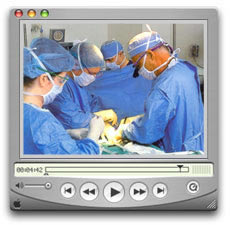
"In operating room, you will be made comfortable and warm and everything that is being done will be explained to you. I realize this is a little frightening since everyone in the operating room wears a mask, gloves and gown for your protection. This brings up another point about who will be in the operating room with you. As I said I will be at your side the whole time. There will also be an anesthesiologist or anesthetist, a surgical assistant, and a surgical scrub technician (the person who is responsible for all the sterility of the surgical equipment and for seeing that Dr. Berger has the instruments as he needs them when he is concentrating on surgery). The only other person present is Dr. Berger.

For those of you (and there are many) who have a concern for modesty in the operating room, you really have nothing to worry about. After the surgical area is cleansed you are covered from head to toe. There is only about an 8 inch by 3 inch window of skin exposed on your abdomen. Many ladies also come for surgery while having their menstrual period. This also is handled very discreetly. You will keep your underwear and pad on until the last minute and then you can remove them in the bathroom and we will have a pad on the bed for you. I really want to impress upon you that from the time you walk in the front door to when you leave after surgery you will be treated with the utmost respect and dignity.

Once you are settled in the operating room you go off to sleep fairly quickly after being attached to heart monitors and a final safety check being done. One more time every staff person in the room checks your name, allergies, and other important data regarding your health. At this point everyone takes their designated position in the room and like a finely choreographed dance surgery begins. Because of keeping sterility in the room, no one can touch another person so each one has to know exactly what they are doing and where the other four people are.I am the one who keeps computer records of anything pertinent to your surgery while Dr. Berger dictates in detail. I am also responsible to see that everyone has the sterile equipment, medications, irrigating fluids, or anything else that needs to be brought in to the operating room. And finally I perform, with the scrub technician, a counting of all the instruments and dressings that are used during surgery. This count is also done before you enter the room and two more times. The final count must match exactly. This avoids any concern of a lost instrument or dressing. This is to insure absolute safety. "

On To The Recovery Room

"When Dr. Berger finishes surgery I will put a small dressing on your abdomen. Surgical time will be recorded and you will soon wake up and move back to your original bed. It is then my pleasure to return you to the recovery room where your nurse will greet you and I will bring your family member in to sit with you.

I just want to assure you once again that you will be in good, safe hands throughout your tubal reversal surgery. Every staff member at Chapel Hill Tubal Reversal Center and Chapel Hill Surgical Center is there to meet your needs and we are honored that you have put your trust, first in Dr. Berger, and then in everyone else who has any part in your care. "

Sally Muncy, R.N. Operating Room Nurse Chapel Hill Tubal Reversal Center

6 Responses to “O.R. Nurse”

Ericka Says: June 27th, 2008 at 6:17 am Sally, this is a wonderful introduction. Thank you. I’m sure it will bring comfort to anyone who wonders what goes on in the OR. It is comforting to know that each and every staff member at Chapel Hill Tubal Reversal Center is a highly trained professional who has the patients’ best interests at heart. That is one of the things that makes this the best place for tubal reversal surgery and why women come here from all over the world.

Rhonda Brown RN Says: June 27th, 2008 at 7:12 am I know that this will bring comfort to each and every person that reads this. I know it will hellp answer lots of questions and bring a calmness to those who are wondering what exactly goes on in the operating room. This is just another example of exceptional patient care that is offered by the staff at Chapel Hill Tubal Reversal Center.

Jennifer Okun Says: June 27th, 2008 at 8:15 am Thank you for the very descriptive and informative post, Sally. You give a clear understanding of what patients are to expect during surgery. I hope all our patients take the time to read our blog - especially before they come here for their surgery. If they do, they will definitely feel more comfortable about what they can expect during their experience here.
Stephanie, RN Says:
June 27th, 2008 at 12:16 pm Thanks Sally. This will help patients understand the role of a circulating nurse and help calm their fears about why and how certain things are done.

Sarah Meachem RN Says: June 27th, 2008 at 2:05 pm Sally’s excellent description of her role as an OR nurse should definitely alleviate patient fears about the OR and general anesthesia. Patients at Chapel Hill Tubal Reversal Center are always in capable hands and receive the best possible care.

Andrea Says: June 27th, 2008 at 5:57 pm Thanks so much for the description, Sally! I can’t wait to meet you, and the rest of the staff. I am scheduled on 7/30. Thanks so very much for taking the time to help ease our fears…one would think that after 2 vaginal births and 2 c-sections, there would be nothing left to fear…not the case!
Thanks again, and God Bless.

Saturday, May 24, 2008

Frequently asked questions regarding operative reports

Operative Reports Before Ligation Reversal Surgery

Undergoing a tubal ligation reversal at Chapel Hill Tubal Reversal Center is an important endeavor and we want to maximize every patient's chance of ligation reversal success. Operative reports are important because they allow us to determine the likely success of tubal ligation reversal surgery. When the operative report is not available, we offer the option of starting with a screening laparoscopy. The choice of whether to start with screening laparoscopy is up to the individual patient. Since most tubal ligation procedures are reversible, it is an option, and not a requirement at Chapel Hill Tubal Reversal Center.

What is an operative report?

An operative report is a typed report describing exactly what the doctor saw and did during your tubal ligation procedure.

Where can tubal ligation operative reports be obtained?

Tubal ligation operative reports can be obtained from the hospital or health care facility where you had your tubal ligation surgery. Your doctor may have a copy of your operative report in their office. The hospital will have a copy of the report in your hospital record and will keep them on file for a limited time.

How long does the hospital keep my operative report?

The time a health care facility will keep records will vary by state. Most states have laws specifying how long records must be kept. If a state does not have laws regarding keeping medical records, then the state medical board will have guidelines which the board encourages physicians to follow. North Carolina, for instance, has no state laws mandating how long medical records will be kept. The North Carolina State Medical Boards recommends physicians keep records for a minimum of 10 years. Medicare and Medicaid records are recommended to be kept for a minimum of five years.

The physician’s office or hospital will typically keep records in their file room for a limited time and then transfer the files to another storage area for several years. Some facilities will create digital records of your health care information and store this information indefinitely.

How can I obtain an operative report?

Contact the medical records department of the hospital where your tubal ligation was performed. You will have to fill out a medical records release form. The operative report can be mailed or faxed to you and to our facility. Please be aware some medical facilities are very busy and have limited medical record personnel. This means they may take some time to send records and you might have to keep a close watch to make sure the records are actually sent in a timely fashion. Chapel Hill Tubal Reversal Center has instructions and a form you can use to obtain a copy of your operative report.

What happens if I can not get my operative report?

If you can not get your operative report you can try to get your doctor to give you more information about the type of ligation surgery you had. Although this is not as accurate as an operative report, this can provide some information. Many doctors will do their tubal ligation surgeries the same way over many years and they should be able to tell you how your procedure was done.

Your best option is to consider a screening laparoscopy. This involves placing a small telescope under your umbilicus (belly button) and looking at the fallopian tubes. This provide quick and accurate information about the condition of your fallopian tubes. When the screening laparoscopy is performed here, we proceed immediately with the tubal repair. If the laparoscopy shows that the tubes cannot be repaired, the procedure is ended without the laparotomy incision and a partial refund is given to the patient.

Will Chapel Hill Tubal Reversal do my reversal surgery if I do not have an operative report?

Yes. We frequently encounter many patients who are unable to obtain their operative report. The choice of whether to start with screening laparoscopy is up to the individual patient. Since most tubal ligation procedures are reversible, it is an option, and not a requirement.

Read More about Operative Reports Before Ligation Reversal Surgery