Tubal Ligation Reversal

Chapel Hill Tubal Reversal Center.

Sunday, August 16, 2009

Tubal Reversal Informed Decision And Recovery

Chapel Hill Tubal Reversal Center (http://www.tubal-reversal.net) -- Dr. Berger discusses the issue of informed decision about tubal ligation reversal with his patient during her recovery just after her tubal reversal surgery. As a nurse herself, she points out how helpful it is to have a full understanding of the tubal reversal process to make an informed decision about it and why she chose tubal reversal vs IVF


Transcript of Video Interview With Dr. Berger

Dr. Berger: And briefly because of their ages they were told no you can’t and that was really not their place. That is not a decision that a doctor makes for somebody else. I mean that is a personal decision based on the concept of informed consent. Then I suggested we talk a little bit about it because to me that is a really important issue. And informed consent is not just the signing of a piece of paper where someone just sticks a piece of paper in front of you. It is a process of when someone calls or starts to seek information. We try to provide very comprehensive information about everything that we can think of that is related to tubal ligation reversal. All of the pros and cons, how it’s done, what are the various options. I mean in the terms of surgery the various types of surgical procedures, alternative treatments which involves in vitro fertilization or some variation of that.

Tubal Reversal Patient: Your website is excellent as far as finding out. I mean, I am a researcher. I will read something to death before I make a decision. And you do offer a lot of information on your website. And everyone was so knowledgeable too. I mean, I did have questions pop up and it was very easy to have questions answered. Even at home if I did think of something it was easy enough to find it on the website or to find someone that could answer it. And that is being accessible too and that is a really good thing.

Dr. Berger: That’s right it is pretty important and we have nurses generally we have two nurses. Well, during working hours we have a lot of nurses who work here. But, outside of work hours we have two nurses carrying cell phones and myself. And I try to be readily available by email. I check email everyday even multiple times throughout the day. But it’s interesting to me too like you are here this is now and we are sitting in the second stage recovery room. And I think I finished your operation around 11:00am.

Nurse: 11:07am

Dr. Berger: And it is now 12; 35pm, so this is within an hour and a half of surgery. I think one of the things that is important to me that I really try to ensure for patients is that not only is the surgery safe but I do everything I possibly can to make sure it is comfortable.

Tubal Reversal Patient: Nods head and answers yes.

Dr. Berger: Because one of the worst things about surgery is that it can be real painful and that’s one of the disadvantages of a surgical procedure and the recovery time it takes. I find it interesting and the reason I asked if you’d be will to talk about it because as a neonatal intensive care nurse you see things from both the patients perspective and as a nursing professional.

Tubal Reversal Patient: Some of the wonderful things you have are the pictures you have and the books in the waiting room and there are people who are wondering are really real and yes they are they are right in the books and that is a wonderful thing. And it really boosts you up a bit.

Dr. Berger: And that is the joy of the whole thing. And obviously, I want know I mean there are various reasons for it. And when it comes back to the issue of informed consent frankly I don’t see how anyone could undergo tubal reversal surgery unless they have a realistic idea of that the success is going to be. That is in the potential benefits and the potential risks. Well if we do not follow up on all the patients that have surgery and find out what the outcomes are how can provide that information? And I don’t know how to say it the sad thing or kind of disgraceful thing is that no one else does this. It does take a lot of effort admittedly. You have to be committed to maintaining that contact which is different then most surgical procedures where once the patient is recovered from surgery and they are no longer a patient. But, to me it’s the only sensible thing to do. It’s exciting to know what is happening. Intellectually, it is gratifying. And it adds useful information to the medical field but it’s absolutely essential for the patients when they are trying to decide what to do. If they don’t have that how could they really decide between IVF or tubal reversal or to go to this place or have a tubal reversal someplace else? These things seem just common sense.

Tubal Reversal Patient: And they are able to decide what to do. When I went to work and told them what I was going to do and they asked if it was going to work and I was able to give them that information because it was right there on the website and plus in speaking with you. I know everyone’s situation is different and every patient that comes through your door has a little bit of a different scenario why they chosen this and what’s going on in their lives and you are right in what you said informed consent is a very personal thing. But the question is will it work for me? And what are the benefits and what are the risks involved to me is I do this? Not just physically but emotionally and it is a big undertaking for anybody. And I really do feel like I was very prepared by you the staff and your website.

Dr. Berger: (To partner) And how about you? How do you feel about it?

Tubal Reversal Patients Partner: The full disclosure of knowing both sides of it it is not a used car sales pitch. It’s here what we offer and here’s the good, here’s the bad and you make the decision on your own. There’s no sugarcoating of anything to get business. You definitely give out the impression of you want people to come in knowing what they are getting into and that they are completely aware of every aspect and every side of it.

Wednesday, July 29, 2009

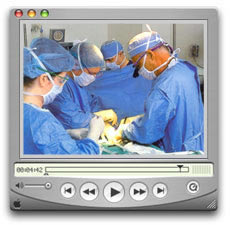
Dr. Charles Monteith, Tubal Reversal Surgeon

Interview with Dr. Charles Monteith
Tubal Reversal Surgeon at Chapel Hill Tubal Reversal Center

Charles Monteith, M.D. speaks about his education, training, and certifications. Dr. Monteith says he currently performs tubal reversals eight to twelve a week and the reasons women mention for wanting to have their tubes reversed. He says these include a new partner, or people have just changed their minds and decide they want to have more children. He adds a lot of women have experienced changes in their bodily functions after tubal ligation, and that patients refer to this as Post Tubal Ligation Syndrome.


Transcript of Video Interview With Dr. Monteith

Interviewer: Can you tell us about your medical school and residency training?

Dr. Monteith: I went to medical school in San Francisco, University of California in San Francisco and finished my MD degree there and then subsequently returned to the University of North Carolina, Chapel Hill to do my obstetrics and gynecology residency.

Interviewer: How long have you been performing reproductive surgery?

Dr. Monteith:I have been performing Gyn. surgery since 1997 but as of a year and a half ago dedicated myself exclusively to working with Dr. Berger and doing tubal reversal surgery.

Interviewer: And before you started working with Dr. Berger did women frequently ask for tubal reversal procedures was that something that something that came in your practice prior?

Dr. Monteith: As a generalist I did not see a lot of women that requested tubal surgery. However, our practice was a majority of young pregnant women. So I didn’t get a fair assessment of how many women were out there that wanted to have tubal ligations reversed. However I did have a partner that did perform exclusive GYN services she fairly often had requests or inquiries about tubal reversal surgery.

Interviewer: What made you pursue a certification in tubal reversal?

Dr. Monteith: I think I had had practiced high risk obstetrics and gynecology for a good seven years after I finished my residency and just one day I realized I needed to change what I was doing or I wasn’t going to last very long doing it. The way medicine has become is very high volume very stressful and little time with patients. I felt like I really wasn’t helping people to the best of my ability. Patients would come they would go. They would their insurance and have to go find another provider. People would come with job movement in the middle of pregnancy or leave in the middle of pregnancy and I just found that I didn’t get a lot of personal fulfillment out of it. I especially like my role as a tubal reversal provider because I like I’m being with a physician is supposed to be. I’m using my skills to help people to the best of my ability. And I especially feel because it’s not a widely offered service that I’m doing even better for a lot of women.

Interviewer: How many reversals do you perform each week?

Dr. Monteith: On average about eight to twelve a week currently.

Interviewer: What are some of the reasons women mention for wanting to have their tubes reversed?

Dr. Monteith: It seems like the most common reason is basically none of us can predict the future and most commonly it seems women find themselves in new relationships. Usually it is bad marriages, separations and divorce. And they find themselves with a new partner and just very strongly they would like to have children together. A close second to that would be to people that have just changed their minds and decide they want to have more children. And then a lot of women have experienced changes in their bodily functions after tubal ligation.

Interviewer: Are you referring to Post Tubal Ligation Syndrome?

Dr. Monteith- Ah yes, what most patients refer to as Post Tubal Ligation Syndrome.

Interviewer: And how frequently do you hear that as a condition that women feel they have developed?

Dr. Monteith- We hear it very commonly. There are probably a lot of women who come through here that never voice it or share it. But, at least in my experience here, I see a patient at least once a day if not every other day that has experienced worsened menstrual symptoms or bodily functions after a tubal ligation procedure.

Interviewer: And how much follow-up or are you able to follow-up after the surgery to see if that has improved?

Dr. Monteith: I am in the process of doing that now. Last year, we did a small case study on five women that had tubal ligations and experienced Post Tubal Ligation Syndrome. This summer it will be a full year and thus far in talking with them it seems at least about 70% of them have gotten better. Very frequently I am amazed that women post on the message board how much improvement they feel after they have reversal surgery.

Interviewer: How much contact do you have with patients after their reversal surgery?

Dr. Monteith: Most patients come from long distances so there is not a lot of direct contact but the most amazing thing is our tubal reversal patients seem to keep close contact by email and through electronic means. So, we hear from a large number of our patients.

Interviewer: What’s the best part of tubal reversal surgery and what you’re doing currently?

Dr. Monteith: The best part is really just using my skills to help a woman, a couple or a family to achieve what they would otherwise not be able to achieve and that is to add more children to their family or their relationship. Or to improve their perceptions about their body.

Interviewer: What do you like about Chapel Hill Tubal Reversal Center?

Dr. Monteith: The thing I like the most about this center and I come from my experience of working a large university and also from working at a large good quality hospital in Raleigh is that this center works with amazing efficiency. We take great care of patients. The staff seems to be real happy and motivated. And we are all dedicated to doing just one thing and that’s tubal surgery. And it feels good to work in a place with such high efficiency for the betterment of patients.

Interviewer: How does Chapel Hill compare to the in patient care of a hospital?

Dr. Monteith: There about the same as some of the best hospitals I have worked at and probably even better. Mainly because we are all focused on one thing and the staff really knows their jobs. And we are all dedicated to making that one goal happen, and that’s safe outpatient tubal repair surgery.

More Information about Dr. Monteith

Monday, July 20, 2009

The Cost Of Tubal Reversal Surgery

For many women and couples who are looking into tubal reversal surgery the cost is a big issue. In these hard economical times everyone is trying to cut corners. There are some surgeons that are very expensive and some do charge less for the tubal reversal surgery.

One of the biggest things to watch for when comparing the prices for surgery is that the price may be lower until you add in the other expenses. What many have been doing is stating a low price and then after adding in the price of the anesthesiologist and the hospital stay, which ends up being very expensive. Many do not realize this until they think they have all the money saved for the surgery and then go to a consult with the surgeon who will be performing the tubal reversal surgery and then are told the added in charges.

Read the rest of this article

Good Financial News for Tubal Reversal Surgery
Women desiring tubal reversal often find themselves being financially creative. The cost of tubal ligation reversal can range from $5400 to over $25,000, depending on where the operation is perform. Chapel Hill Tubal Reversal Center keeps the cost for tubal reversal to the absolute minimum to help women be able to afford the operation that will allow them to have more children. Many women wanting a baby after a tubal ligation share their ideas on the Tubal Reversal Message Board for overcoming the financial obstacles to having this life-giving procedure.

Friday, July 17, 2009

Tubal Ligation Side Effects

If you have been doing research about having your tubes tied before having the surgery, then you are smart. Most women, however, don't do any research. They just know it's the most popular form of permanent birth control and just go for it. After all their doctors have told them it's popular and completely safe. Unfortunately, many of them find out later, after the symptoms start, about some tubal ligation side effects called Post Tubal Ligation Syndrome.

But let's say you are looking for information ahead of the surgery and you have run across mention of post tubal ligation syndrome. Doesn't sound like much fun, does it? So you are probably wondering just who is at risk of suffering from this condition and what causes it. If you have already had your tubes tied and are suffering it, you may also want to know what can be done to relieve the problem which is below.

Who is at risk?

Risk factors that some study has been done on resolve down to two things - what type of tubal ligation you have and your age.

In an interview at the International Pelvic Pain Society conference with Dr. Ahmed El-Minawi, Ph.D., we learn that women who have had what he calls more destructive forms of having their tubes tied are the ones at higher risk to suffer from ptls. The methods which cause the most damage to the mid-segment of the fallopian tubes such as with the Pomeroy or Irving-type procedures fall in this category. Also included are the coagulation methods with a bi-polar coagulation, or as we laymen call it, cauterization, being the more destructive.

Additionally, women who are in the 20s when they have their tubes tied are at greater risk of having menstrual disorders. That's from one study which looked at women who had tubal ligation vs. those who did not and who ended up in the hospital with menstrual disorders. Women in their 20s were 6 times more likely to go. To put it another way, that's 600% over the normal population.

While looking at the above two paragraphs might make you think, "Hey, I'll just wait till I am 30." and to be sure to get rings or clips to tie your tubes, that just is no guarantee that you won't get post tubal ligation syndrome. Why? Well, that leads to the next part.

What causes post tubal ligation syndrome?

This part I have to start with a warning. We really don't know what causes ptls at this point in time. It really needs research, real studies, by researchers who don't go into these studies with the idea that ptls doesn't exist. I've read some of the abstracts and conclusions of studies already done and even when a study shows that something is going on, it's discounted on various grounds. As the old saying goes, "I'll see it when I believe it." Personally, I have just read too much from women who are suffering from post tubal ligation syndrome not to believe something is going on.

So the present theories, including from one doctor who was involved in this field for ten years, is that when the tubes are tied, the blood supply to the ovaries is damaged. It can even be cut off entirely which can cause ovarian isolation which leads to atrophied ovaries. When either of these happen, your body isn't going to get the right amounts of the hormones you need. Or you can get the right amount of one and not enough of another leading to hormonal imbalance.

The other theory is that even when the blood supply is just fine, damage is done to the receptor cells which can lead to this failing of the hormones again. These cells carry the messages about the hormones. Messages don't get through; hormones don't get through, at least not in the right amounts.

Basically, the main theory that however it is done, the hormones get all messed up which lead to a woman suffering a whole host of problems which make up the symptoms of post tubal ligation syndrome (check other articles about the list). This is why many women upon complaining to their doctor of their new symptoms end up on birth control pills. It's either that or a hysterectomy in most cases which leads to its own list of problems.

But if you really want to do away with ptls, your best chance of recovery lies in having a tubal reversal. Dr. Berger of the Chapel Hill Tubal Reversal Center began collecting statistics (only tubal doctor I know of who does this) when he realized how many women were coming to him for tubal reversals in order to relieve their symptoms of ptls. He can now say he has a 90% success rate in helping women recover from post tubal ligation syndrome.

What this means is that if you do go ahead with having your tubes tied and you end up in the unlucky 37% or so that have post tubal ligation syndrome, if you choose, you do have a way out. But please check more into ptls before you go ahead with your tubal ligation first.